News
What Is DAC8 and How Does It Affect Crypto Users?
17 Jun 2026
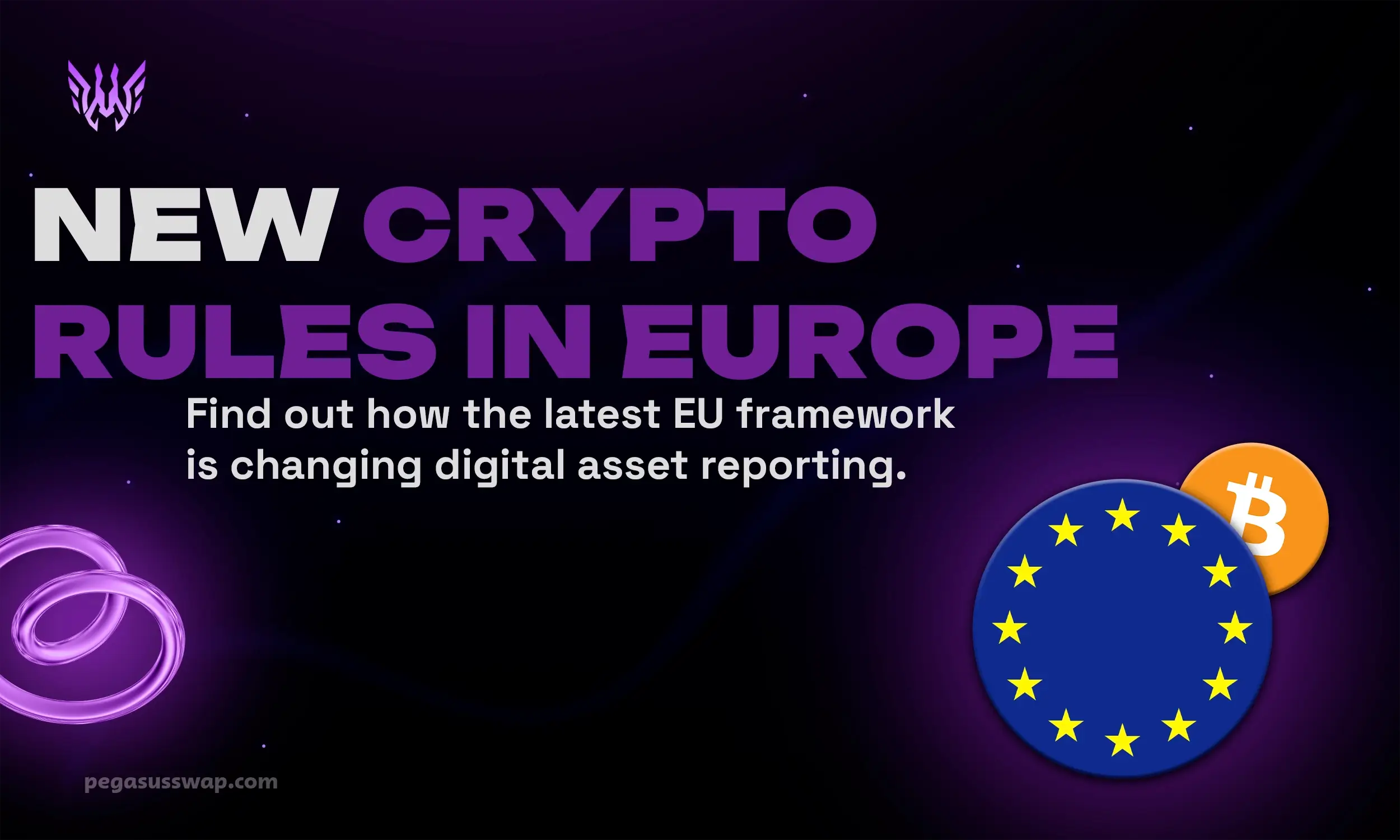
Since January 1, 2026, every centralised crypto exchange serving EU residents is legally required to collect your identity, log your transactions, and report everything automatically to tax authorities. No notification, no opt-out. The data goes straight from the platform to the government.
That’s DAC8. And depending on how you use crypto, it either changes everything or changes nothing.
What Is DAC8?
DAC8 stands for the Eighth Directive on Administrative Cooperation. It’s an EU tax law adopted in October 2023 and in force since 1 January 2026 across all 27 EU member states. The goal is simple: bring crypto into the same tax transparency framework that already applies to bank accounts. Before DAC8, exchanges held all your trading data but had no legal obligation to share it with governments. That gap is now closed.
DAC8 is the EU’s version of the OECD’s Crypto-Asset Reporting Framework (CARF). As of March 2026, 76 jurisdictions globally have committed to implementing it, including the UK. The US is expected to follow from 2027. This is not a Brussels-only story.
What Gets Reported?
If you use a centralised exchange and you’re an EU resident, the platform is now required to report your full name, address, tax ID, and a complete record of every transaction you make: crypto-to-fiat, crypto-to-crypto, and withdrawals to external wallets. That last one matters: even sending funds from an exchange to your own hardware wallet is a reportable event.
The first reporting period covers all of 2026. Platforms submit the data to national tax authorities, who automatically share it with every other EU member state where you have tax residency. The EU-wide exchange deadline is 30 September 2027.
What DAC8 Does NOT Do
This is where most coverage either gets it wrong or leans into panic mode. DAC8 does not ban crypto. It does not make self-custody illegal. It does not monitor your on-chain activity in real time. It does not apply to non-custodial wallets or wallet software where you control your own keys.
As privacy advocate L0la L33tz put it shortly after DAC8 came into force: "Non-custodial software, which you should be using if you want privacy in the first place, remains completely unaffected."
The reporting perimeter is the on/off-ramp. Once your funds leave a custodial exchange and sit in self-custody, they’re outside the DAC8 reporting chain. What happens inside your wallet is not reported by anyone under this directive.
What This Means Depending on How You Use Crypto
If you use centralised exchanges: Your activity is now being reported. The exchange already has your KYC data. Starting with 2026 transactions, it is legally required to send everything to tax authorities automatically every year. If you’ve been assuming crypto gains were invisible to governments, that assumption no longer holds on any major exchange operating in or serving the EU.
If you use non-custodial swaps: DAC8’s reporting obligations target custodial service providers, meaning platforms that hold your funds and maintain your account. Non-custodial instant swap services, where the platform never takes custody of assets and no user account exists, sit outside the directive’s primary reporting perimeter under current definitions.
PegasusSwap is non-custodial. No account, no identity verification, no custody of funds at any point. You send from your wallet, the swap executes, you receive in your wallet. Based on DAC8’s current definitions, this model sits outside the directive’s reporting scope. Regulatory interpretation continues to evolve, so consult a tax professional for your specific situation.
One thing that does not change either way: your tax obligations. DAC8 changes who reports your activity to authorities, not whether your gains are taxable. Self-custody and non-custodial swaps are not mechanisms for tax evasion. If you make a gain, it is taxable under your local law regardless of how the swap was executed. Keep records and report accordingly.
FAQ
When did DAC8 come into force?
1 January 2026. The first reporting period covers all of 2026, with the EU-wide data exchange deadline of 30 September 2027.
Does DAC8 apply to exchanges outside the EU?
Yes. Any platform serving EU residents is in scope regardless of where it is based. A US or UK exchange with EU customers must comply.
Does DAC8 apply to my self-custody wallet?
No. Wallet software where you control your own private keys is not in scope. DAC8 targets custodial service providers, not wallet software.
Does DAC8 create new taxes on crypto?
No. It creates new reporting obligations for platforms, not new tax obligations for users. Whether your crypto gains are taxable depends on your country’s existing tax law, which DAC8 does not change.
Is DAC8 the same as MiCA?
No. MiCA governs how crypto platforms operate and get licensed. DAC8 governs what they report to tax authorities. Both apply to EU crypto activity in 2026 but they are separate regulations.
Not legal or tax advice. This article is for informational purposes only. Tax obligations vary by jurisdiction. Regulatory interpretation of non-custodial services continues to evolve. Speak to a qualified tax professional about your specific situation.
If you want to swap crypto without your transactions being collected and reported by a custodial platform, see our guide to the best no-KYC crypto exchanges in 2026, or our step-by-step guide on how to swap ETH to BTC without KYC.
Swap crypto on PegasusSwap - non-custodial, no account, no identity verification required.